
Spinning Silken Yarns: Unraveling the Mysteries of Fingernet Caddisflies with
GCY
By Anya Metcalfe
[This piece was originally shared by the author, Anya Metcalfe, at River Tales, GCY’s live storytelling event on Nov. 2, 2024 in Flagstaff, Arizona.]
Hi! My name is Anya, resident bug nerd. I am an ecologist with Grand Canyon Monitoring and Research Center and USGS. Broadly, my research looks at the effects of dams and dam management practices on river foodwebs. More importantly, my research has taken me to Grand Canyon. A lot. I’ve been very fortunate living and working here in Flagstaff to have found my way onto science trips, private trips, commercial trips, and the very very best trips of all which are of course with GCY.
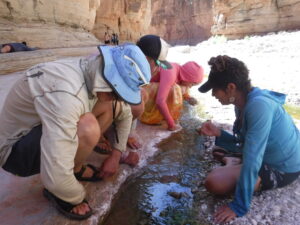
The GCY trips I’ve joined were all PIS …… Partners in Science. We are so good at acronyms. On PIS trips, we join students that are interested in learning about Grand Canyon Science with scientists that have active research in the canyon and with the amazing GCY river guides, who consistently have their own wealth of knowledge specific to Grand Canyon.
From the scientist perspective, I would like to share that I am OBSESSED with these trips. Relative to science trips, PIS trips have given me access, time, and ample willing field assistants to test questions directly in the field and to really slow down and make natural history observations, which are the key to asking good questions. All science starts with asking questions.
WHAT ARE CADDISFLIES?
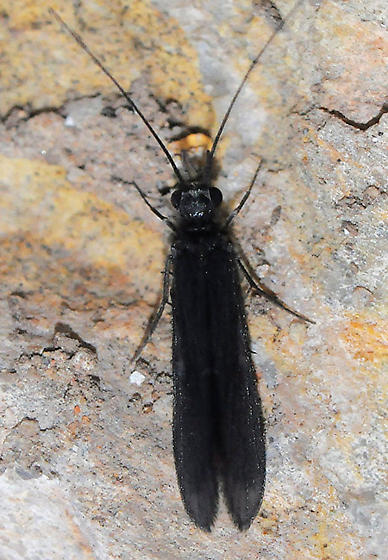
Photo 1 Finger Caddisfly, photo credit: Bob Barber
Caddisflies are tiny insects that spend most of their life living underwater, but are closely related to butterflies and moths. They have 4 life stages (egg, larva, pupa, adult), the first three of which are aquatic. Like caterpillars, caddisfly larvae have silk appendages, which they use to build shelters and nets for feeding. Some of the coolest caddisflies that I’ve ever come across live in National Canyon. Of course National Canyon has cool caddisflies. National is on river left, mile 166, just downstream of Tuckup. National is more or less the upstream end of Hualapai Nation boundary, which extends downstream to mile 274L. Hualapai are people of the tall pines. The Colorado River, I believe, is the lowest point in elevation for the modern day Hualapai reservation, which extends from river level to over 7,000 feet on the Aubrey Cliffs.
National Canyon is in the Muave limestone and is a type of limestone called dolomite– white and glittering packed with gleaming heaps of calcium carbonate and magnesium carbonate. There used to be a huge sandy beach that wrapped all around the mouth of National. It was very desirable as a campsite and the skyline there at night is enough to keep your eyes wide open until sunset. Serena Supplee immortalized the night view from that camp as a raven’s silhouette of constellations in the sky.
In 2012, though, this campsite became less popular. A huge flash flood ripped out of National and wiped the beach out, covering it in large gravel and cobbles. Now when you approach National Canyon, the abundant gravel crinkles and jingles below your flip flops and floppy ankles and the approach can feel like forever when it’s really hot out. However, once you get into the side canyon walls you start seeing glimpses and pockets of water and a hypoheric stream peeking out of the gravel.
PHILOPOTAMIDS IN NATIONAL CANYON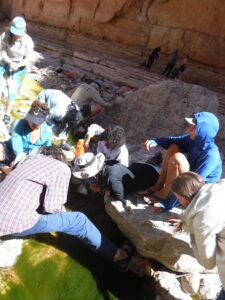
The first time I saw fingernet caddisflies in National was on a science trip in April 2017. I saw what looked like a ghostly veil snagged and floating in place in the slightest bit of current. It was entrancing and unlike any little dancer I’d ever seen before. I immediately picked it up. The silken net collapsed in my palm subject to the epic gravity of our terrestrial world. But I poked around and to my surprise and great joy found a cute little caddisfly larva in the back of it. Yay! Into a vial of ethanol to take back to the lab for identification at the microscope it went.
At the time, I had no idea what kind of caddisfly it was, but I kept poking around in those nets and finding the same larvae over and over again, so I was pretty sure they were responsible for them. A week later in Flagstaff, I keyed out the larva to be in the family Philopotamidae. As a family they are referred to as the ‘finger net caddisflies.’ I don’t know the exact history of that common name, but I can tell you that they build the largest nets I’ve ever seen underwater. I’ve seen some that extended 12” from the start of this wide funnel opening that then peters back to a small net where the caddisfly larva hangs out. It is stunning architecture, tool use, and complete reengineering of stream flow and habitat.
I saw them there again, doing the exact same thing, on return April trips in 2018 and 2019. 2020 rolled around and I didn’t get into the canyon for a while after that because, in addition to the pandemic, that’s the year I became a mom!
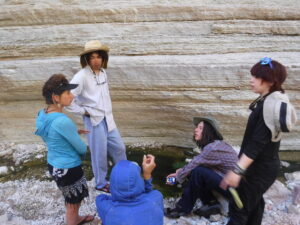 My first return into the canyon post-motherhood wasn’t until April 2022, 3 years after last visiting the captivating Philopotamids of National. I was on a science trip and something that often happens on science trips happened– we didn’t have time for bonus stops outside of our scheduled priorities for sample collection.
So okay, this is exactly why GCY Partners in Science trips are so dreamy for scientists– there’s usually only 2 or 3 of us and our research interests and needs get priority in the trip itinerary, especially when they are communicated clearly far ahead of time. In June of 2022, I got on the river a second time and it was with GCY. We had an amazing crew, great students, no exchange of passengers. Two weeks. Full commit.
As we neared National Canyon, I started foaming at the mouth in preparation for stopping to see if the Philopotamids were still there. I get so excited about these things. And I talk. A lot. I definitely talked up these caddisflies for days to the students and guides. We were all excited for National.
The day finally rolled in. I hopped off Hazel’s boat eager to charge up that crunchy gravel and look for that trickle of water that sustains my little friends, three years later. We were all super excited to be there at this point. National Canyon is closed off for unpermitted visitation, but learning about these caddisflies as part of understanding the Grand Canyon foodweb was covered by our science permit with Hualapai, and we knew exactly how fortunate we were to be there.
We approached the canyon in silence, panting in the heat of the western canyon in June, the welcoming shadows of the tributary canyon walls both beckoning us in and seemingly growing farther with each step in that sparkling summer sun. The trickles of water that I had seen in previous Aprils were not at the bottom of the canyon. I swallowed with nervousness, were we going to find the caddisflies or not??
We kept going up and got far back into the Muave narrows where water reliably flows perennially. My eyes were glued to the water. No nets. We started flipping rocks looking for bugs. The water was thick with Cladophora on that visit, a filamentous green alga that also weaves and wavers dramatically in flowing waters. “Where are the caddisflies?” I exclaimed, feeling some disappointment, not only that they weren’t there but that I had waxed poetically about them for days to the river party. Were they underneath or entrenched in the Cladophora? Seb, Piper, and I began systematically pulling strands of Cladophora from the creek and looking for bugs. Still no caddis.
Bec, our TL, pulled everyone aside for a moment of appreciation for our surroundings. I took a deep breath. It was okay. Not finding the caddisflies was disappointing but also interesting information in itself. We had learned that the larvae were not present there in June of that year. “No caddisflies” was still an observation and important data to glean from the day and to learn from.
Bec led us in a moment of silence and read us an excerpt from Braiding Sweetgrass by Robin Wall Kimmerer. Appropriately, this book is about the nexus of eastern and western science and does a great job comparing, contrasting, and celebrating both Indigenous knowledge and the scientific method. I don’t remember the exact excerpt they read that day, but here is one I really love from the chapter called In the Footsteps of Nanabozho: Becoming Indigenous to Place–
“Some people say that time is a river into which we can step but once, as it flows in a straight path to the sea. But Nanabozho’s people know time is a circle. Time is not a river running inexorably to the sea, but the sea itself – its tides that appear and disappear, the fog that rises to become rain in a different river. All things that were will come again.”
The moment of silence helped me reset and look at where I was and who I was with. I took a deep breath and stepped out of the caddis obsessing, to the best of my ability, and joined the crew in exploring and celebrating the canyon and it’s winding white narrows. We braided the long, green Cladophora to our heads, relishing its sweet coolness, the chill of water, and the sweet, sweet, deep June shade. As we headed back to the boats, I was brushing my hands along a wall of that glittering dolomite and stopped short of a thick wall of spider webs. As is my habit, I inspected the webs to see what was in them.
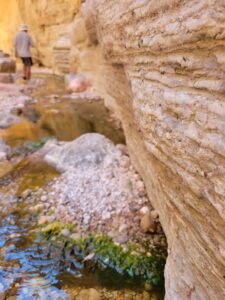
Photo 2 Look closely to see small black caddisflies hanging in the spider web (top right).
CADDISFLIES! Adults. By the dozen. Small and black. Unlike moths and butterflies that have scaled wings, adult caddisflies have a dull and hairy coating on their wings. I knew these ones on sight immediately. They were the only species of fignernet caddisfly that I’d ever come across in the main stem Colorado River and the number one suspect for what the larval caddisflies from National might be. We hadn’t found any larvae in the creek in National because it was June and the larvae had moved on to their terrestrial adult life stage. It was the middle of the day and we would have never seen the hatch, which happens primarily in the transition from day to night, but the spiders had saved some from the evening before. The caddis in the spider webs were dried up in the heat but they did not seem like they had been there long. Another clue to understanding these critters’ life cycles in National– they emerge as adults in mid-June!
Adulthood is brief for caddisflies. They don’t even have functioning mouth parts. They usually spend a year transitioning from egg to larva to pupa before flying out of the water and spending at most a week in their adult form– mating, laying eggs, and dying. This is really different from us. As humans, we spend a relatively short proportion of our lives as immature larvae (well, most of us!). It’s why river trips are best– and most impactful– when shared with the bright-eyed optimism, curiosity, and passion of youth.
I’ll wrap up with one more Bec-inspired Braiding Sweetgrass excerpt:
“Knowing that you love the earth changes you, activates you to defend and protect and celebrate. But when you feel that the earth loves you in return, that feeling transforms the relationship from a one-way street into a sacred bond.”
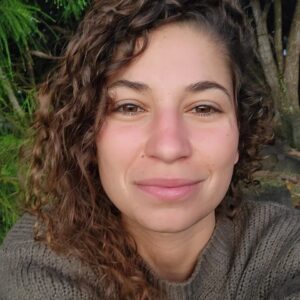 Anya Metcalfe is a Research Analyst in the Department of Forest Management at the University of Montana and an ecologist with USGS Grand Canyon Monitoring and Research Center. Proud to sometimes be called ‘Bug Lady’, Anya has had the pleasure of joining several GCY trips in Grand Canyon and on the San Juan to look for bugs, capture fish, record bat activity, and share the joy that can come with observation and scientific discovery. Anya is part of the Partners in Science team that equips GCY trips with community science projects each year and has worked with ‘Citizen Science’ data collected by GCY and the Grand Canyon river running community since 2012.
Are you a professional photographer or videographer interested in helping GCY tell our story? Please email development@gcyouth.org to learn more about how you can volunteer for our nonprofit.
Do you have a submission for The Ripple Effect? Check out our guidelines here.